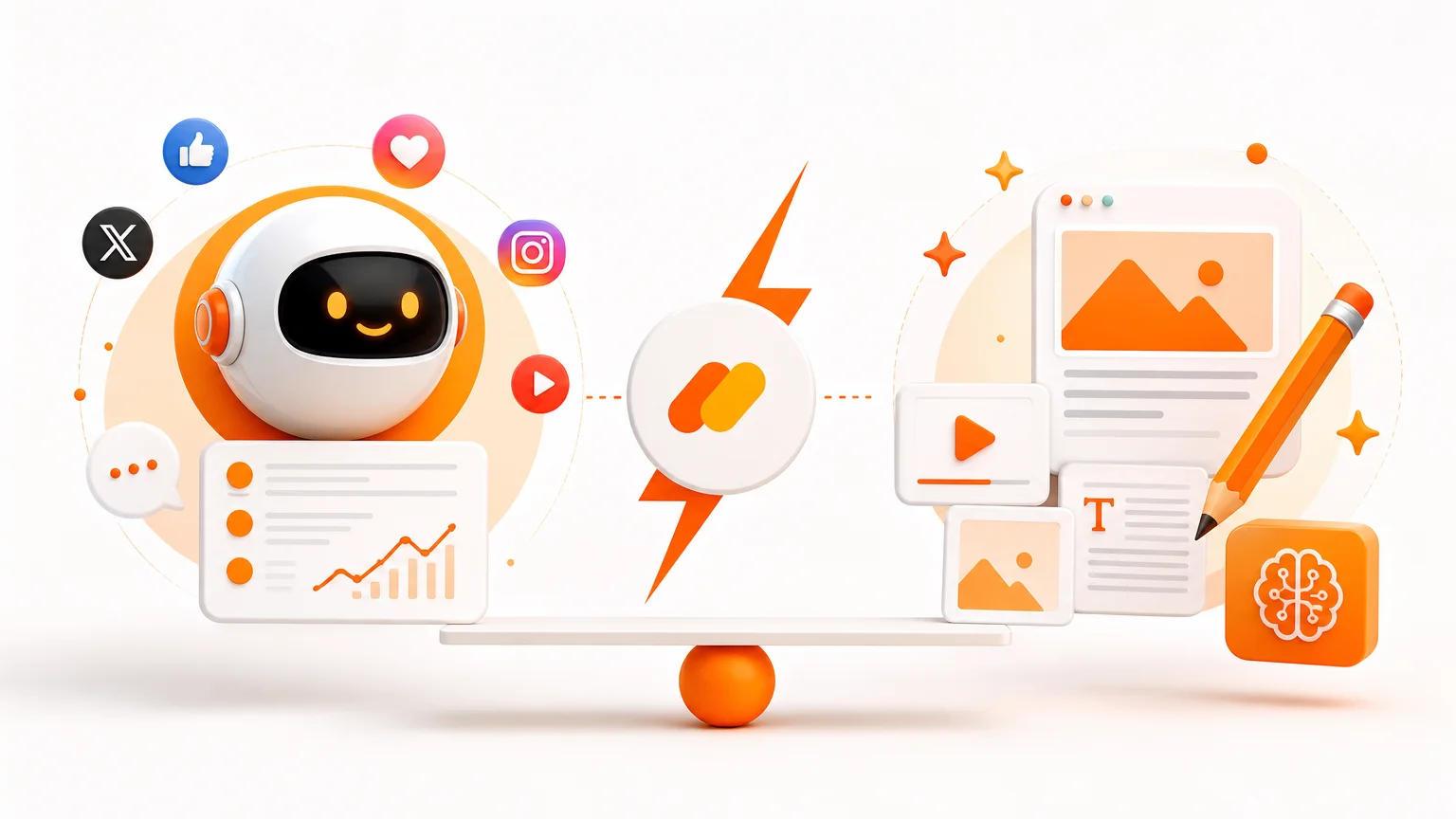
AI social media agents are rapidly evolving the way brands manage social accounts. While many still confuse them with AI content generators, these two categories of AI tools play very different—yet complementary—roles in the world of social media automation and digital marketing. Grasping the difference is essential for businesses looking to level up their approach, delight customers, and stay competitive on social platforms.
Understanding AI Social Media Agents
AI social media agents redefine what it means to automate and scale your presence online. At their core, these sophisticated systems function as tireless digital assistants capable of not just helping you post, but actively managing everything from conversation monitoring to strategic campaign optimization. Unlike simpler bots, modern agents leverage vast data, machine learning, and natural language processing to engage users in real time and drive meaningful, nuanced interactions across platforms.
Core Capabilities of AI Social Media Agents
- End-to-end account management: AI social media agents handle multiple social profiles on your behalf, syncing activities across platforms like Facebook, Instagram, X (formerly Twitter), LinkedIn, and TikTok. Agents can route, assign, or resolve comments, tags, and messages automatically.
- Real time engagement: These agents spot mentions, comments, customer questions, and brand gossip as it happens—often before humans could respond. They reply instantly using preapproved messaging, escalate sensitive issues to a human team for resolution, and ensure your followers always feel heard.
- Strategic decision making: By analyzing ongoing audience data and engagement trends, AI social media agents suggest optimal content formats, campaign timings, and even influencer partnerships. They adapt replies based on evolving sentiment, public events, or emerging topics.
- Community care: Built-in moderation tools can detect and hide spam, filter abusive comments, and maintain a supportive community atmosphere. Brands can configure agents with proactive engagement triggers—like welcoming first-time commenters or thanking loyal fans by name.
- Learning and improvement: The best agents get smarter over time. Through machine learning, they refine their responses, pick up nuance in customer feedback, and align more closely with your unique brand voice and consistency goals.
For example, an e-commerce company using Blazo.ai might deploy agents to manage hundreds of product-related DMs, auto-respond to inventory questions, and push users to conversion with personalized offers—all while tracking which strategies deliver the highest ROI in the platform dashboard.
How AI Social Media Agents Work in Practice
Imagine launching a new product campaign. Your agent:
- Publishes teaser posts and stories across channels at optimal times
- Monitors replies, instantly answering common queries like restock dates or sizes
- Flags urgent complaints, such as product defects, for a human manager
- Uploads reviews and user-generated content, attributing each to the source
- Runs analytics to suggest mid-campaign adjustments based on real-time performance
With such automation, marketing teams can focus on high-level strategy while agents handle the details at scale 24/7.
What Are AI Content Generators?
AI content generators are creative workhorses designed to produce social-ready material—including text, images, and even short videos—at a pace and scale that would be nearly impossible for most human teams. Their algorithms are built for ideation, copywriting, and multimedia assembly, turning user briefs into dozens of unique posts, captions, or blog titles in minutes.
Key Features of AI Content Generators
- Instant content creation: AI content generators produce copy, graphics, hashtags, and more from a simple prompt. Just enter a topic, audience, or brand guideline—then let the engine deliver multiple variations for review and scheduling.
- Multiformat support: Generate assets for every channel, from Facebook Stories to TikTok scripts and scheduled LinkedIn posts. Some AI tools can automatically tailor length, tone, and formatting for each platform's best practices.
- Creative templates and inspiration: Most platforms offer a vast library of ready-made templates—holiday posts, product announcements, event launches, and more—so marketers can overcome creative blocks with ease.
- Visual and multimedia generation: State-of-the-art tools, including those from Blazo.ai, now support AI-powered image editing, video snippets, custom infographics, and artwork creation to help brands develop visually consistent, branded posts.
- Assisted collaboration: Built-in features let entire teams review, edit, and approve assets before publication, making the process faster for agencies juggling dozens of client campaigns at once.
Unlike agents, AI content generators don’t interact with followers or analyze engagement data for strategy adjustments—their strength lies in delivering creative material quickly to fuel any calendar or campaign.
What an AI Content Generator Looks Like in Action
Consider a local service business needing a week of posts for Facebook, Instagram, and LinkedIn. The content generator can:
- Draft a series of daily posts with on-brand captions, emojis, and suggested hashtags
- Produce eye-catching promotional graphics from just a product shot and logo
- Rewrite a long blog article as digestible social snippets for multiple platforms
- Provide A/B-tested headlines matched to different audiences
- Build video slideshows with music, using only uploaded images and a brief description
Teams can select the best options, tweak them if needed, and then hand them off to an agent—or post themselves through their preferred scheduling platform.
AI Social Media Agents vs. AI Content Generators: Main Differences
Distinguishing between these two types of tools is critical to optimizing your workflows and customer engagement strategies. While both add value, they fundamentally differ in both intent and outcome. Here’s a deeper comparison:
- Purpose: AI social media agents manage the entire engagement process, from content scheduling and community interaction to analytics and escalation. AI content generators focus solely on generating high-quality creative assets, like a digital content studio.
- Functionality: Agents deliver customer support, nurture followers, and monitor brand reputation in real time. Generators churn out branded messages, visuals, and campaign content for manual or automated publishing.
- Level of automation: Agents can autonomously reply to customers, adjust posting schedules based on live engagement, and surface key audience insights. Generators automate creative production, but do not execute or track campaign performance.
- Integration breadth: Agents connect with CRMs, analytics suites, and messaging platforms to facilitate seamless communication. Generators often offer direct publishing to social networks but lack deeper CRM or customer care integration.
- Learning capabilities: The best agents learn from every interaction, adapting tone, message, and escalation rules. Content generators incorporate brand guidelines, but generally do not analyze results or evolve based on feedback.
Think of AI social media agents as your always-on community manager and strategy consultant, while AI content generators are your dynamic creative department, producing on-demand assets as needed.
Use Cases: When to Use Each Tool
The choice between AI social media agents and generators depends on your daily marketing challenges and broader business ambitions. Here are practical applications for each, with examples:
- To automate customer service and lead nurturing, employ AI social media agents that respond to DMs, forward hot leads to sales, and handle after-hours inquiries, freeing up your team from repetitive responses.
- If you need fresh, diverse content for product campaigns, use AI content generators to quickly produce post series, promotional banners, and video updates based on the latest brand messaging.
- For community management during viral events (e.g., trending hashtags or unexpected news), agents monitor brand mentions at scale and craft relevant, timely replies aligned to your policies.
- Agencies managing multiple brands or clients combine both: generators for content at scale, agents for unique engagement and reporting per account.
- B2B firms deploying thought leadership can have generators draft blog-to-social synopses, while agents identify trending industry discussions, auto-join relevant threads, and bring back leads for the sales pipeline.
- For content curation tasks, content generators can reformat blog posts as infographics or quote cards, while agents distribute, schedule, and suggest which content to promote based on historic engagement data.
Most successful brands blend both tools strategically, allowing AI social media agents to handle the dynamic, two-way side of engagement, while content generators ensure a continual supply of creative, brand-aligned content.
Key Features to Compare
When reviewing AI marketing solutions, prioritize the following features based on your workflow needs and business objectives:
- Content personalization features: Can the tool adjust content or replies according to customer demographics, platform, or engagement history?
- Brand voice and consistency: Does the AI adapt its tone to match your own? Can it adjust per campaign or audience segment?
- Platform integration capabilities: Look for deep integration with the networks, CRMs, analytics, and customer service solutions your business already relies on.
- Content calendar automation: Can the AI build, update, and shift a publishing calendar based on performance data—without constant manual intervention?
- Data privacy and ethical safeguards: Ensure your platform meets compliance requirements, stores data securely, and avoids misusing customer information.
Comprehensive platforms like Blazo.ai provide robust integration and customization, letting users deploy both agent-driven engagement and AI-powered content generation under one dashboard. For more on content quality and brand identity, see How to Make AI-Generated Social Media Posts Sound More Human.
How to Choose the Right AI Tool for Your Business
Selecting the right blend of AI social media agents and content generators requires honest assessment of your organization’s needs, team bandwidth, and future growth plans. Follow this step-by-step implementation guide:
- Map your current workflows: List all tasks performed for social—from ideation and approval to responding and reporting. Highlight bottlenecks.
- Identify your highest-impact needs: Is rapid, relevant engagement critical (such as for customer service or crisis management)? Or is content creation for multiple channels your biggest hurdle?
- Demo both platforms: Explore best-in-class AI social media agents and AI content generators, ideally in a combined solution where feasible.
- Check platform integration: Make sure solutions connect smoothly with your existing tech, such as CRMs, email, analytics, e-commerce, or helpdesk software.
- Pilot on a limited account: Start with one brand or campaign. Measure time saved, engagement uplift, audience satisfaction, and creative output quality.
- Adjust and expand: Take lessons from your pilot phase to optimize settings, train your team, and roll out to other brands or regions as you gain confidence.
For businesses that need both always-on engagement and dynamic content, solutions like Blazo.ai excel by letting you blend the strengths of each AI type, all while maintaining oversight and customization control.
The Future of AI Social Media Agents and Content Generators
The space is moving quickly. In the next few years, expect several major shifts:
- Smarter collaboration between tools: Agents and generators will become more integrated, with creative output informed directly by real-time engagement data. A campaign could be designed and adjusted automatically based on what customers are asking or how they interact with each stage of the funnel.
- Advanced content personalization: AI will increasingly generate posts and replies tailored specifically to individual users or micro-communities, reflecting location, purchase history, or interests. Marketers will need to set guidelines to preserve privacy and avoid overstepping lines between helpfulness and intrusiveness.
- Expansion into new media: Expect to see content generators power dynamic video, audio, and interactive experiences, while agents autonomously manage live audio or video Q&As and real-time support threads.
- Deeper analytics integration: AI social media agents will bridge social with sales and CRM pipelines, allowing brands to measure precise business outcomes from their engagement strategies and content performance.
- Ethical considerations for AI: As automation increases, brands must ensure transparency, fairness, and responsible data use in every automated interaction, with clear policies for escalating sensitive or emotional topics to human managers.
Platforms like Blazo.ai are leading the charge by unifying these capabilities, preventing the creation of low-quality "AI slop" content, and supporting seamless, brand-safe automation. For best practices and pitfalls to avoid, check out AI Slop Is Taking Over Social Media: How Brands Can Create Better AI Content.
Stay informed by referencing trusted authorities such as Meta for Developers, the Twitter Automation Guidelines, and respected industry trend sites like Social Media Examiner.
Frequently Asked Questions
What is an AI social media agent?
An AI social media agent is an advanced automated tool designed to act on behalf of your brand on social platforms. They go beyond posting content—they monitor brand mentions, interpret engagement sentiment, reply to DMs, route complex queries to human agents, and continually optimize communication strategies based on real-time insights. By maintaining real time engagement and adhering to brand guidelines, these agents help businesses deliver exceptional customer experiences around the clock.
What is an AI content generator?
An AI content generator uses artificial intelligence to produce high-quality written, visual, or multimedia assets based on supplied topics, themes, or brand instructions. Instead of manually brainstorming, drafting, and editing, teams can leverage these tools for bulk post creation, campaign ideation, or content repurposing. Content generators work best as creative assistants—they don’t reply to followers or track how content performs, but they help keep your feed fresh and professional with minimal human input.
Can AI social media agents and content generators be used together?
Absolutely. Many brands find the best outcomes come from a hybrid approach. Use content generators to automatically create campaign assets at scale, then AI social media agents to schedule, post, and actively engage with your audience based on the generated content. For instance, after a content generator produces a week of posts, your agent can analyze what types drive the most engagement and adjust future posting strategies accordingly. This synergy reduces manual work, increases campaign flexibility, and can significantly improve engagement rates compared to manual or single-tool approaches.
How can I measure AI performance on social?
Measuring the impact of AI on your social strategy is essential. Track metrics like:
- Response time: How quickly agents reply to DMs, comments, or mentions
- Engagement rates: Likes, shares, comments, and saves compared before and after AI deployment
- Content reach and impressions: How far generated posts travel
- Sentiment analysis: Audience tone and feedback in replies
- Conversion rates: How many customer inquiries, leads, or sales result from AI-driven campaigns
Robust platforms like Blazo.ai offer analytics dashboards that bring these metrics together with easy-to-read visuals, so marketing leaders can spot trends, make improvements, and prove ROI. Be sure to balance quantitative data (numbers) with qualitative feedback (actual customer comments and experience reviews) for the fullest picture.
If you're exploring AI social media agents or content generators—or want to build a unified marketing automation strategy—contact CosmosFX today for expert guidance tailored to your goals and industry.